
A New Hobby & Rec Business Breakdown
I am starting to look at businesses with a different set of eyes, mainly focusing on their business model and see how they build defensibility (via network effects).
Rec raised a $6.2M seed round co-led by TechCrunch, NFX, and several more VCs. It connects people to recreational sports in their communities, replacing archaic systems in city Parks & Rec departments.
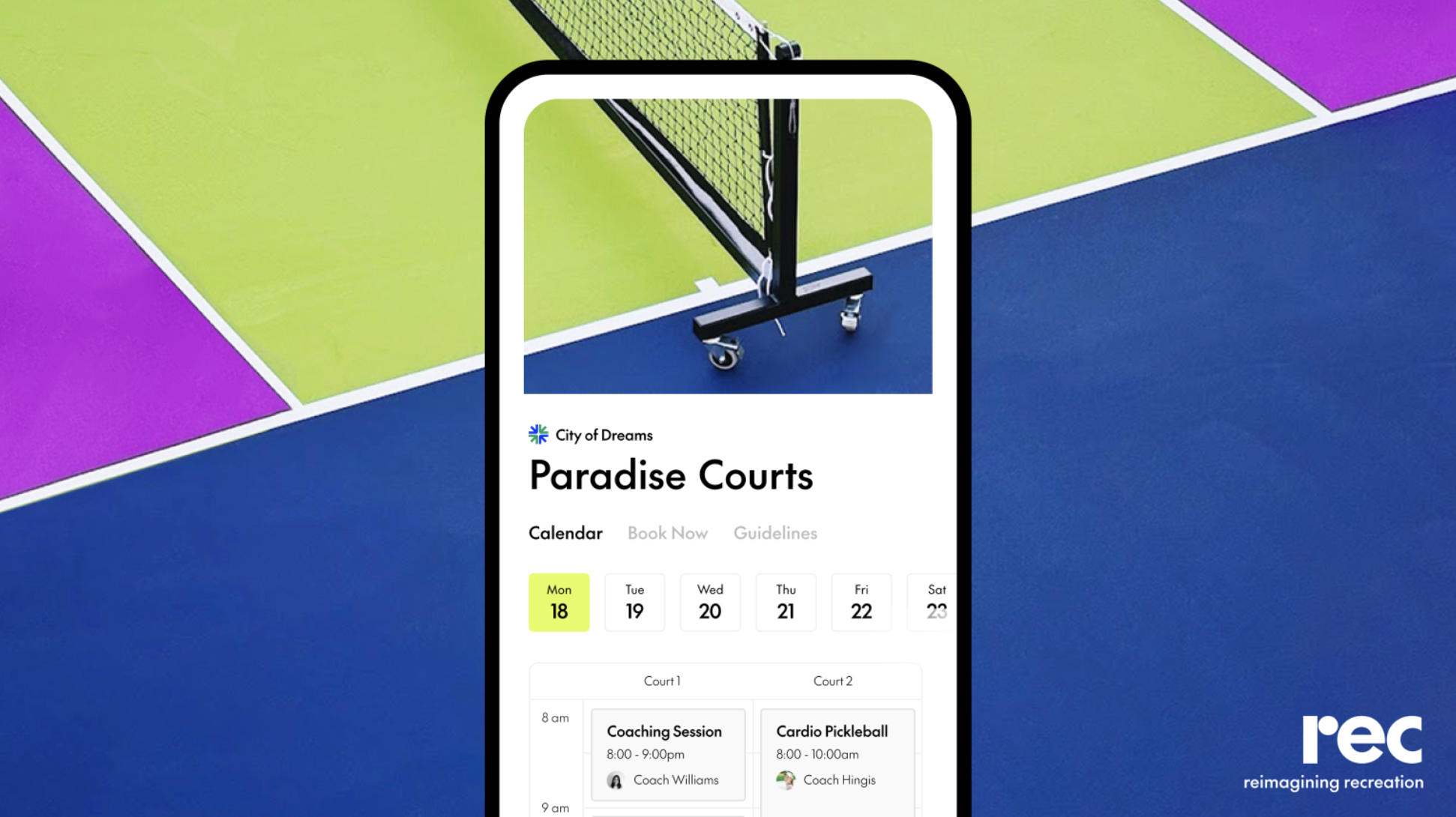
It’s no doubt a very boring and unsexy business, but doesn’t mean it’s not a good business. Since NFX invested, it’s likely has a pretty good pricing model, defensibility and strong network effects, so let’s dive into its business.
The market is big.
Parks & Rec departments manage over 10 million courts, parks, and facilities, and 62 million Americans have a relationship with their local Parks & Rec department. But those relationships are run on printed materials and legacy software today. That makes it nearly impossible to manage and serve people in the way we’re now used to: through our phones.
Interestingly NFX mentioned that the American recreational sports market grew 14% in the past two years alone, wow.
Then there are the network effects in place.
It has a personal network effect which and it’s very strong. Think about everyone that is connected to the same park via Rec. Your friends and your neighbors from the same town or adjacent towns might use Rec.
Then you have the 2-sided marketplace. Think about all the coaches and instructors offering a variety of courses like tennis, pickleball, softball to residents. They can schedule courses there, get demands, convert and process payment altogether on one platform. Coaches can be the one that draws more students to join Rec and kickstart the referral flywheel.
The physical network effects are very strong; once a park decides to use Rec, it’s unlikely it will switch to another. Rec becomes embedded in daily life off-screen.
NFX even mentioned that “Because of these network effects, the physical viral effect, and because the SaaS software is modern, early trials have shown that once a city deploys Rec, usage of city facilities increases 30-50%.”